Showing posts with label container garden. Show all posts

Saturday, 17 March 2012

Root Veg from the Container Garden

I've been spring cleaning all my containers in readiness for a house move to Birmingham.  Today it was time to empty the roots containers and harvest the contents - beetroots, parsnips and carrots.

When I pulled the roots out, there were interesting results.  I probably planted the same quantity of all three but most of the harvest were beetroots.  I had a few parsnips although all the parsnips had good sized roots and only one carrot.

They were growing in containers about 30 cm deep by 90 cm long and there were two pots. 

All the roots were grown in spent compost that was home to tomatoes the previous year with a little scattering of wormery compost right at the base as a motivator for the roots to seek nutrients. 

I thought that the spent compost would be sufficiently poor for the roots, but maybe it was not poor enough. 

It was probably OK for the parsnips and the carrots as the parsnips formed great roots, but maybe not the right conditions for the beetroot. 

The beetroots didn't form nice, round beets.  Perhaps the soil was still too rich for them?  Another possibility is a lot of the beetroots were long, like carrots so perhaps that little bit of wormery compost treat at the base of the pots has encouraged them to seek the nutrients! 

It is looking likely that I will be growing in open ground next season so many more comparisons between the two styles of gardening to follow I'm sure! 

Towards the end of last season, I was trying to form a list of crops I found easy to grow in containers and to concentrate on these in the future and crops that don't grow so well in containers to grow them in open ground in the community gardens I support with growing advice.  Roots were on the list of things not to grow in containers as although they are not much effort, unless you count watering - I don't think there is such a high yield from them.

On a happy note for roots grown in containers, all the roots above provided me with my evening meal this evening.  I steamed the beetroot tops and roasted the roots and they were delicious!  I think the worms in the wormery will also be really happy to eat the trimmings from these organically grown veg too!

Do you grow roots in containers?  Do find them a success or a struggle?

Saturday, 11 February 2012

Container Garden: Using Spent Compost

In urban areas, growing in containers and raised beds on rooves, terraces and patios is the method of choice.  Compost is really quite expensive and I don't like spending money needlessly or throwing away anything that can be recycled or have a second life.

I don't throw away spent compost but I do make a note of what has grown in the soil most recently.  For example, if I have grown something from the solanaceae (potato family) I ensure I do not grow anything from the family in the same soil when recycling it - in fact I will try and find a legume to grow in the soil next following the crop rotation rule of legumes following the potato family.

In the second hand soil, if growing something that's a hungry plant (e.g. pretty much anything except roots)  I add a generous portion of vermicompost, the beautiful black compost that my wormery makes and mix it in well with the secondhand soil.  If you are lucky enough to have the space for a traditional compost heap or a darlic composter this will be great too.

This saves me a lot in valuable compost - but using this approach you do have to be very mindful of  crop rotation and what's been growing in the soil before.

When growing perennials, I change the soil annually - especially for tree onions and kai lan which can be prone to disease.

I don't usually extend the use of compost past two growing seasons and usually just dispose of it in the borders where my landlord's shrubs live and I sometimes grow salads in the dappled shade under the small trees and shrubs and they grow really well in this third hand soil.

In theory I think you could just keep continuing to extend the use of growing in the soil by adding feed or vermicompost but it gets difficult to keep track of the compost after about two seasons which is why I stop using it in containers after that point.  I feel sure it can be done, but you would need a good system or to keep good records to keep track of which soil is where and its history.

Do you have any techniques or systems for using spent compost?  Would love to hear other approaches.

Friday, 27 January 2012

2011 saving money with a small garden


In 2011 I saved £172.45 through growing my own food.  With what I have learned over the last year I am sure I can increase that saving this year!

I only recorded savings between May to December as that was when I was initially inspired to find out how much I actually save with growing my own food.

May

In 2010 I hadn't really learnt to grow many things to eat over the winter months as yet with chard being my main winter crop so until May this was really all that was growing outside together with the perennial herbs.

The saving for this month was £2.21 which consisted of salads, herbs, peas, turnips and some cabbage.

June

Things were starting to pick up a bit in June and I was able to more than double those savings to £5.34.  The spring sowings were planted out and starting to crop.

Crops I was eating in June were salads made with kai lan, chard, nasturtium leaves, pea shoots, mustard leaves, squash flowers, etc.  I was making herbal teas with mint and lemon verbena.  My crop of early potatoes were ready to eat and the potato bag produced nearly a kilo of salad potatoes - now that was a crop I savoured!  I was also eating french beans and peas.

July

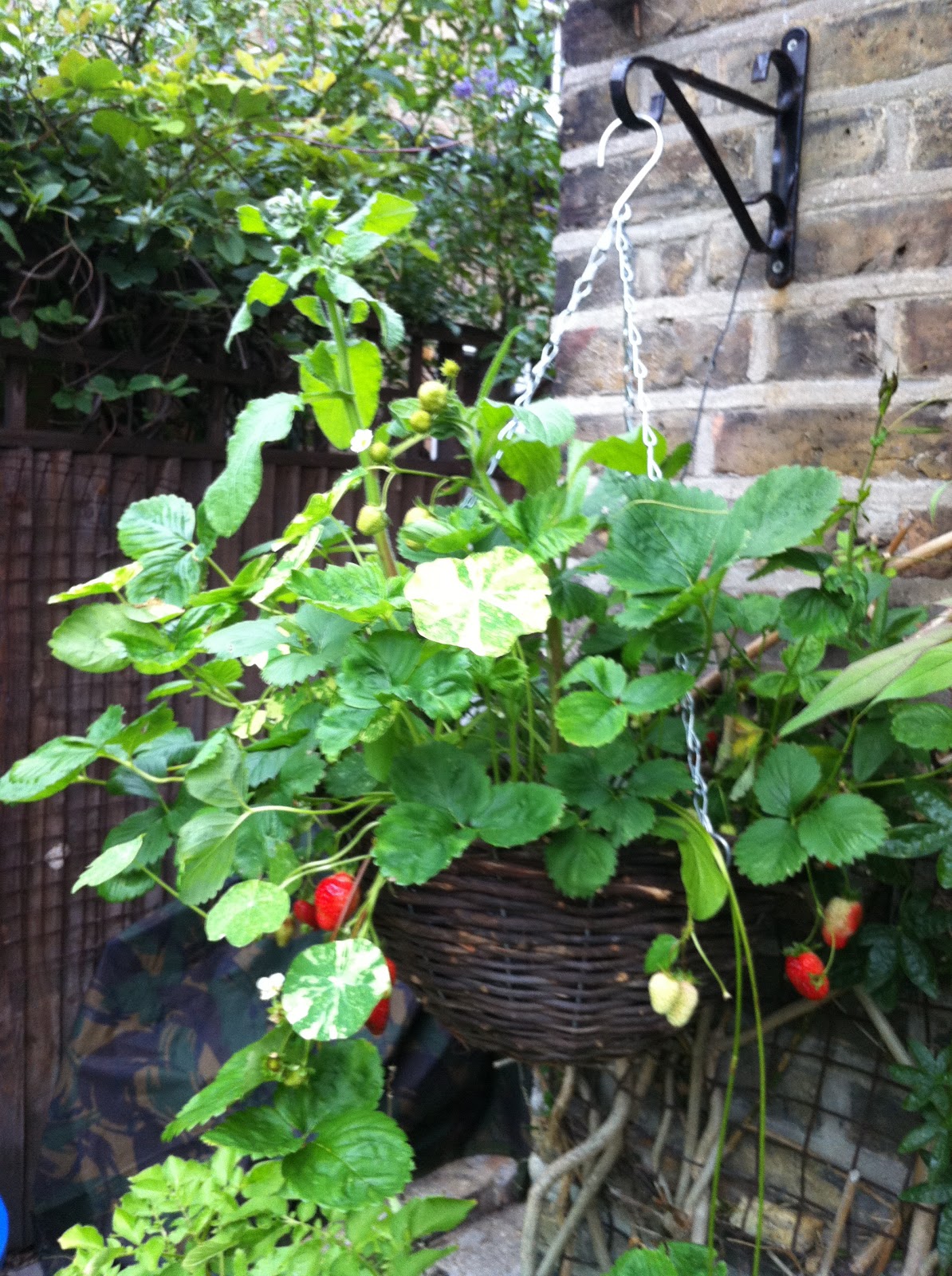
Savings continued to grow in July when I saved £7.90.  I had similar crops to June except for the potatoes - I was then waiting for my second batch of earlies which were being grown for my boyfriend's  rest & recouperation break from a tour in Cyprus in August.  There were also some new crops that came in to season: courgettes started to crop, patty pans and strawberries in hanging baskets.

August

The savings took a wapping jump to £72.51!  It includes gifts of 800g chard and 3kg of tomatoes saved from blighted crops which were given in return for volunteer gardening maintenance in a community garden.  As this was free food I included this in my savings.  In addition, it highlights one of the major benefits of joining or helping out in community gardens - free food!

What was eaten in June and July continued to crop and with the addition of  chillies and sweet peppers, aubergines and tomatoes.  Interestingly these are all in the same crop family - Solanaceae.


September

The savings were pretty similar to August coming in at £62.53.  Again, a little generosity inflated my crops as a friend gave me 500g windfall apples which I turned into my first ever jelly - it was delicious and set marvelously.  All the crops in season in August were still producing in September just slightly less prolifically.  We had a really hot week at the end of September/early October - unfortunately I had already removed my tomatoes due to the blight experienced in August which would have done really well in that heat.

October

Things really started to tail off this month at £15.81.   Although, keeping that saving value high were the winter squashes.  The summer in 2011 was disappointing with not much sun but in mid to late autumn, temperatures were remaining stable at about 15 degrees centigrade which was ideal weather for the winter squash to fully finish on their vines before being cropped.  With the mild weather, tomatoes and chillies were continuing to finish cropping and winter salad was starting to be substantial enough to eat.

November

The year was really starting wind down now with £6.17.  Chillies and sweet peppers were still cropping and kale, cabbage, kai lan, nasturtium, chard and winter salad were this month's crops.

 
It has been a brilliant exercise recording all my crops and their weights.  Its given me something solid to reflect on.  Through the data I can see which months things were cropping in a challenging summer with little sun.  It also made me realise what foods were expensive and which ones were less expensive.  It told me that with a container garden it makes more sense to grow the high value crops that I can get a good yield from.

For 2012, I have decided to capitalise each season on getting the most value from my plot.  I will grow the expensive Solanceae through the summer and concentrate more on brassica types through the winter.  I will grow what grows easily in pots and not invest too much space in those crops that don't fare well in pots.  I found turnips were a disaster and peas were difficult.  However, I think I will still grow a pot of peas as they are like sweets in the garden!

From the summer, I will be planning my winter crops better - I was starting to do this in late summer 2011, but I will give this more focus in 2012 and sow some kohl rabi good and early.  I will experiment with a different variety of kale to see if I can find a favourite as this grows so well in winter and I find it easier to grow in containers than cabbage.

Lets see if I learn from 2011's data and really improve my savings and crop yields this year.  Watch this space!

Here's the Spreadsheet if you would like to see the results in more detail.

Have you done an exercise to record your crops?  I'd love to hear of your experiences.

Tuesday, 27 December 2011

2011 Gardening Year of Trials and Tribulations

What a challenge 2011 has been for us gardeners but with challenges comes resourcefulness and problem solving.

If we look back over the past year we've had an extremely warm start in spring with April reaching over 20 degrees centigrade.  In May, temperatures dropped (but I find they do most years so waited until early June to plant out the cucurbitaceae (squash)).  Then the summer didn't really come.  July was grey and wet through some of the weeks.  Then August came and didn't really bring summer either ending, certainly in the South East with a day of severe rain that swiftly followed with blight attack on many tomatoes (the community gardens and school garden I support suffered this more than my small patio garden).  In September as there were so many green tomatoes being given to me I learned to make chutney for the first time.  Followed by a crazy Autumn and really high temperatures in the first week of October when lucky people who hadn't cropped yet got a week's summer.  And now we are experiencing a rather warm winter - in fact, I'm not sure whether to call it winter at all.  Usually the nasturtiums have died off by now but my sheltered patio garden hasn't really felt the bite of a frost yet.

So a rather challenging year to garden in but his meant lots of adaptation and resourcefulness.

Early in the year my boyfriend bought me a plastic greenhouse.  It was absolutely fantastic for hardening off seedlings in early spring and I used it for this purpose from March all the way through to June.  For a few months I left it vacant, but I've really got into growing chillies this year and our summer wasn't really a good one for them so as the weather started to disappoint in July I started to move them into the plastic greenhouse - and they loved it!  I didn't even have to water them that much as they would sweat off the excess water and it would stay in the green house.  I continued to use it all the way through to October.  If you don't have one, and don't have the space for a glass green house I really recommend getting a plastic greenhouse!

In the summer I also started to use horticultural fleece.  I've never used this before, not even in the winter but I bought some by mistake when I was buying some horticultural mesh for my cabbages.

For ages it remained stored in its wrapper and then when I started to see flowers on my aubergines I had little hope of them bearing fruit and I thought about the idea of using the horticultural fleece.  It worked a treat!

Definitely using it next year, especially if I get impatient with my tomatoes!

This year I stumbled across a really good variety of winter squash that seemed completely unperturbed by our disappointing summer.  They are called Zapallito de Toscana and I ordered them from the Garden Organic Heritage Seed Library Catalogue.  I am definitely going to be sourcing more seed for next year.

It was the first year I grew from seeds sourced from the Heritage Seed Library and I had some absolutely beautiful purple peas. 


I wouldn't recommend them for crops to be grown in a container garden as they didn't really give enough of a yield but the flowers were beautiful and I just couldn't help take photos of them.

I would definitely recommend growing Heritage Seed Library varieties and to learn seed saving.  Its a great source of seed if you like to experiment with unusual or old heirloom varieties.

I tried seed saving for the first time this year and found it tremendously rewarding.

Next year, I am going to grow more varieties that are perennial/biennial and/or are low fuss to grow. Varieties I found to be in this camp this year were nasturtiums (plant them anywhere you have a spare bit of ground - you can make pesto, a little chopped leaves on top of curries, flavour for salads - they are truly wonderful and add colour to small plots), zapallito de toscana (winter squash), kai lan, chard, kale and herbs, salad potatoes...  

I am also going to introduce more early varieties of tomatoes as these will probably be more UK climate friendly.  I'll also look for early varieties of chillies, sweet peppers and aubergines as these could be more suited to the UK growing season too.

In 2012 I will be looking for more varieties to add to this list.  I am still trialling Egyptian Walking Onions and broad beans.

A review of gardening in 2011 wouldn't be complete without mentioning my wormery.  It provided me with wonderful worm casts and the garden benefited so much from the worm tea.  If I didn't have my own wormery I would pay for worm tea.  So much more superior than bought organic fertiliser.

Next year I plan to be far more savy in July and August with my winter planting.  Its lovely having things growing in the winter garden and I think you should be able to graze and browse your garden no matter what month of the year it is.  I still have some winter salad growing and brassicas in my garden.

I think it so important to keep a relationship with your garden no matter what season and that includes eating/grazing from it as many days of the year as possible!

Friday, 14 October 2011

Growing Aubergines Outside

I think I need to fess up... in my last post there were some pictures of my prize aubergines.

These were grown outside in the patio garden but with a little bit of help.

Now I don't have the space for a green house and am so envious of people who are able to grow their tomotoes, aubergines, peppers, chillies, physalis ... the list goes on!... under cover.  They always look so healthy when grown under cover.  And of course they do for they are in the solanaceae family, also known as the sun lovers family.

Whilst I don't have a green house, there are other options for the space challenged container gardener.

Last year, we had a rather disappointing summer (not that much different to the one we've just had) and all the flowers dropped off my aubergines - i.e. no fruit. 

This year the aubergines have been enjoying the comforts of a hort fleece tent fastened to the wall with clothes line pegs and a stone on the floor to stop it flapping about.  They seem to really like the tomato planters I have grown them in this year too as these are the tallest aubergines I have ever grown aubergines. They also enjoy a diet of worm tea from the wormery and comfrey leaves.

If we are getting a good sunshiny day I unveil them and then tuck them in once the sunshine's finished for the day to keep them warm for the night time.

I know, I know, I could just grow easier things that don't have such a need for heat but I love eating aubergines - they are just great roasted in the oven with tomatoes and garlic.  Its a challenging labour of love every year but this year I think I've cracked it!

The other thing I was not telling you in my last post was the peppers and chillies that are still happy outside despite the drop in temps.  They are not showing signs of stress yet and I don't like denying them outside sunshine if they are able to cope with our outside temps so to help them extend their stay outside that little bit longer, they are in the portable greenhouse, a present that my lovely boyfriend bought me last spring that proved invaluable when I was hardening off seedlings in spring and now to extend the growing season into autumn.

So there you have it... I'm now thinking of hort fleece tents for the tomatoes next year, especially if the summer's the same as it was this year I just need to improve on the frame for the hort fleece tent - any tips out there?

Sunday, 28 August 2011

Asparagus Peas

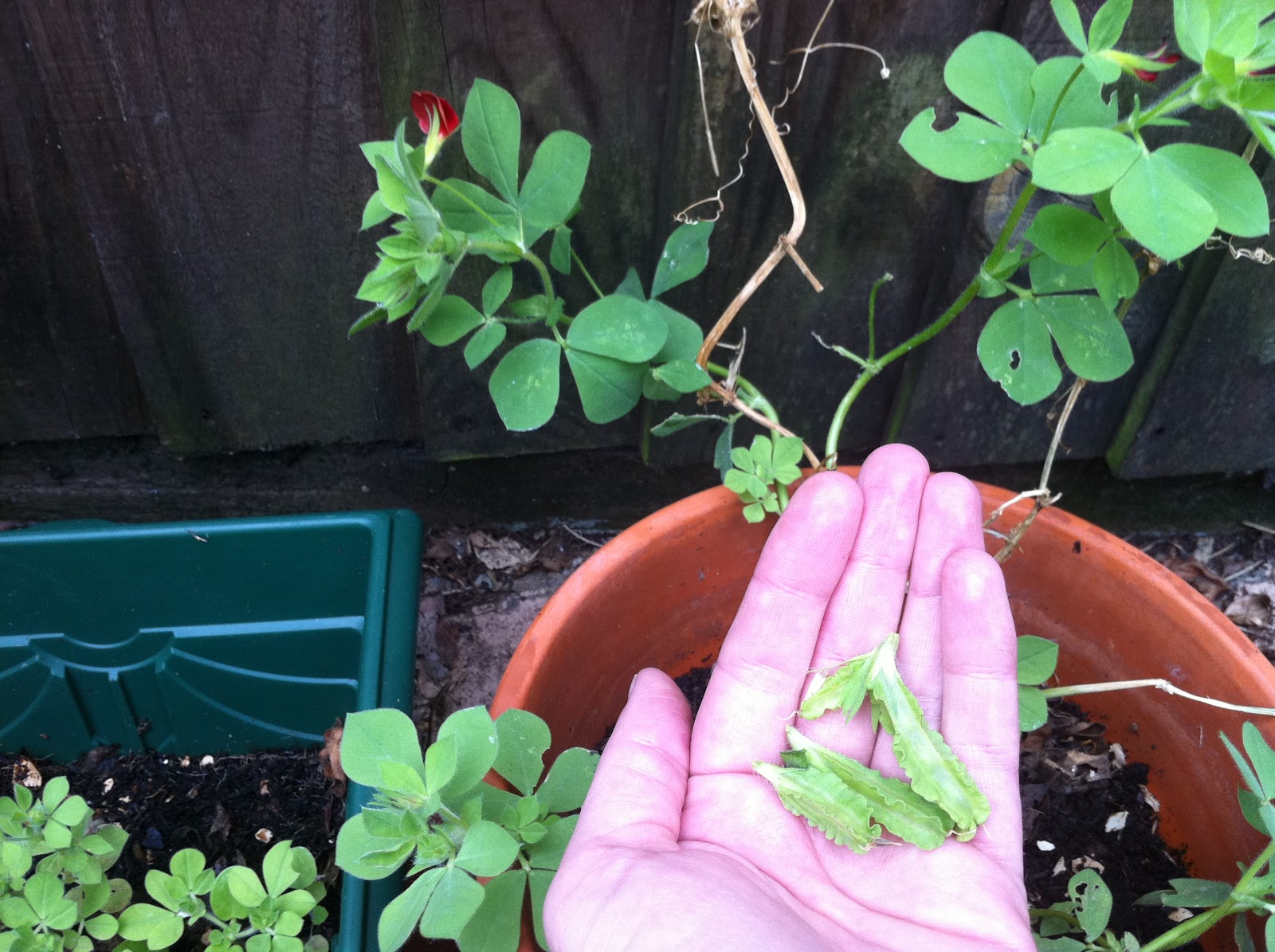
One of my new experimental crops I'm trying for the first time this year are Asparagus Peas.  They have these lovely deep red blossoms that result in a very interesting looking peapod.

Researching on the web, they are a sort of poor man's asparagus as they are said to have a similar flavour and consistency and don't require a trench or a 3 year wait for the first harvest.  Just cook in butter with a little salt.  I'm not sure they taste like asparagus, but an interesting pod nevertheless.

Their seeds are sown directly in their growing position late May.  I planted them at the base of my peas so that I had something new to take over when the peas died back.

I've had a reasonable yield from them if compared to the pea harvests, but I think they are more suited to a larger plot than grown in a container.

However, in their favour, they have continued to crop when other harvests have dwindled in our not particularly disappointing British summer.

A very interesting novelty crop to experiment with as the pods look so interesting and the flowers so pretty.  It's always fun having something new to experiment with in the kitchen.

Maybe a good one to try with children as they can be sown outdoors, are quick to germinate and have their curious looking pods.


Monday, 20 June 2011

Leaving the garden for a holiday away


I have just returned from a holiday with my boyfriend who is currently working away from home with the UN.  It was a lovely week's holiday but I could never have relaxed and enjoyed myself had I not had my lovely neighbour, Mic do the watering while I was away. 

This is the first holiday I have returned find a garden full of healthy plants.  Usually I spend the holiday checking the UK weather forecast trying to find out how dry it is in the UK and not really focusing on enjoying my holiday.  Before I leave for the airport I put upside down bottles of water contraptions in all the containers and heavily water everything before I go and then return home to find everything desperate for a drink and at least one casualty.


I have to say that Mic has been a star and everything is much bigger and bushier than I left.


My strawberries have not started producing fruit yet but there are plenty of flowers with promises.


Have to admit that my tomatoes have gone beserk!  Which is of course an amazingly good thing.


Really have to get these potatoes out of the bag now I think and find out if there's any goodies at the bottom - this is the first time I'm growing potatoes so it could go either way!


I think I may have some peas ready to eat.  Just need a closer inspection....


Looks like these guys have bolted... probably not suited to container growing as the turnips we've been growing in the Bramford Community Garden were all around golf ball size a fortnight ago.  I will experiment with eating the flowering heads in some salad instead.


Now the Kai Lan has got to be about 3 times the size it was a week ago.  I can see this might be this year's favourite super discovery.  (Last year's was chard).  I think a welcome home salad is in order.

I also found these beautiful radishes - perfectly rounded and ready to eat.  Another veg that has at least trippled in size in my week away.

If you'd like to see what else ended up in the welcome home salad... here's a link to the recipe garden salad

Friday, 10 June 2011

An ornamental edible garden


Lately I've been pondering a lot about the ornamental qualities of an edible garden.

It could be my work at the garden centre that has inspired me.

It could be due to planting a few companion flowers in the garden to ward off pests (e.g. calendula and nasturtiums).

It could be recently reading Alys Fowler's book The Thrifty Gardener - I could not help but read this gardening manual cover to cover!  This book inspired me to look at the garden as a combination of a thing of beauty and an edible garden.  Previously, I had always been focussed on growing edibles.  It really got me thinking about combining the two aspects, not just the plants but the containers that the plants live within.

Since then shopping has not been the same - always on the lookout for potential plant containers where ever I go and what ever I consume.  Take a look at what the radishes are growing in, in the picture below.


As well as hunting for potential containers this also led to my sowing a few annual ornamentals which I haven't really done before.  Cosmos was the ornamental flower that crept in - technically speaking the rest of the flowers are recommended companions for an edible garden.


I find rainbow chard with its full leaves and colourful stems always to be visually beautiful as well as very tasty.  Virtues of growing chard


Another vegetable that I have always thought very beautiful are squash.  I grew crookneck summer squash last year and the leaves looked so lush, the flowers and the bright yellow fruit looked amazing. Wonder of germinating squash


This year I have simply been completely bowled over by the beauty of purple pea varieties.  I think their flowers are simply astounding.  The flowers look sweet and no doubt their peas will taste amazing too.  I have never grown these before.  They came in this year's batch of seeds from the Heritage Seed Library called Purple pod.  Just take a look at how it flowers.  Peas please


I had almost forgotten to eat nasturtiums.  I've grown them for the last few years but simply as a fodder for the aphids so that they would leave my more prized edibles alone.


The other day I was gardening at the Bramford Community Garden and one of the other volunteers ate a nasturtium leaf.  The penny dropped - of course, you can eat the leaves! So I picked a nasturtium leaf.  Immediately, I smelt a very evocative smell that reminded me of a smell I knew from my childhood and with that smell I remembered the taste.  I thought why didn't I do this sooner!!  Munched on the leaf and that leaf packed a punch of peppery flavour.  Ever since then, nasturtium leaves have appeared in my daily salad!!  And the leaves and the petals are so beautiful too.


Last week I planted a Globe Artichoke in the Bramford Community Garden for its beautiful tall thistle shaped flower and its multi purpose of being a beautiful and architectural plant as well as an edible.  (Not the one in the picture!)  It is just a baby plant at the moment but I am looking forward to it growing taller than me with loads of beautiful flower heads!

Another thing of beauty is strawberry plants.  They come in a range of flower colours from deep dark pink, to pale pink through to the classic white flowers.  They can be planted in hanging baskets where the ripening fruit can dangle down graciously.


Take a look at these radish flowers. 


If I hadn't neglected the radishes last summer, I would never have seen this beautiful display of white flowers.  Following on from the flowers came the radish pods which were delightfully crunchy in salad (a bit like very small mange tout). 

Friday, 27 May 2011

The effects of the lovely rain


Yesterday, in South London we had the first real rain showers since I think late April when we had a big thunder storm.

This morning I wondered through the garden at breakfast time (as is my morning ritual) looking for any new shoots and new signs of life/flowers when I stumbled upon the strawberries.  These strawberries arrived through the post as bare root plants last Friday with only little stumps where the leaves would sprout from.  Two days ago I gave them a little feed from the worm farm and yesterday mother nature decided to help me along too with some wonderful bursts of sheet rain.  All in all both of these have had a marvelous effect on these lovely strawberries. 
 
The interesting thing about rain water is that plants always look so much better after natural rainfall rather than from tap water.  Especially London water with its hard, lime scale.  Sure they need the tap water when nothing's coming from the sky, but there's something in the rain that just adds pure vitality to plants.

Ever the optimist, I am now even starting to hold out hope for some strawberries in around a month's time.  Maybe a little more rain please?  I shall keep you posted...

In the meantime, I shall continue to be grateful for yesterday's rain as the garden is looking even more lush than earlier this week.

Tuesday, 24 May 2011

The garden's starting to look lush again


Lately I've been feeling like the garden's starting to take shape and look like a well populated edible garden again.  Through the winter months I only had chives, rainbow chard, rosemary, sage, garlic and a trough of carrots/parsnips I  planted last spring.  Now as I stroll through my garden having a nose at what's going on its starting to feel... well like I have company again!


The tomatoes are starting to come along


the strawberries are making an appearance (these arrived just last week from bare root stock)


the french beans are climbing away,


the peas are flowering (I really like raw peas!).  I've counted 6 flowers so far and they've grown another foot since my pea blog 10 days ago.


the turnips are sprouting,


The pepper plant has lots of flowers.  (I think this is a capsicum judging by the leaves, it just sprouted from some soil and last year I grew both chillies and capsicums)


the tops of the potatoes are huge and look like they want to escape the potato bag I planted them in!

.... it really feels like my edible garden is starting to happen.


I am currently eating chard salads, radishes and making tea from the garden (mint and lemon verbena).  My cooking is being flavoured with chives, basil and coriander.


Every day I water and I look out for anything new - seeds that have sprouted, any new leaves, flower buds, etc.  I like this habit as it also means I spot the pests early and the aphids are enjoying this time in my garden as much as I am - squishing fingers at the ready (I garden organically).


I'm experimenting with turnips for the first time this year.  They came in a lucky dip seed packet from the Heritage Seed Library.  Normally I wouldn't choose them as my parents didn't grow this vegetable on the small holding when I was a child so it just isn't a habit in my family to grow them, but as I had some seed it was too good an opportunity to grow some and try it for myself.

Last week I sowed some Kai Lan seeds.  They came highly recommended by Mark Diacono and are perennial.  I am currently very interested in perennial edibles, especially plants that have ornamental appeal as well as the essential edible appeal.  I am always inspired to try new edibles, but the ornamental factor is inspired by my day job in my local garden centre.  The punters like things that look pretty.  If you have discovered any good perennial edibles lately, please do let me know as I love to experiment.  Even better if they can be grown in pots :)